

Roles: Uploading documents and running conversations is done by Legal Staff. Enabling the integration and managing settings is done by an Administrator.
What the AI Assistant Does
The AI assistant lets your team interact with case documents in plain language - without reading every page manually.Document Analysis
Upload any case document and the AI reads, indexes, and makes it queryable.
AI Chat
Ask questions about your documents in plain language. The AI cites the exact source text in its answers.
Report Generation
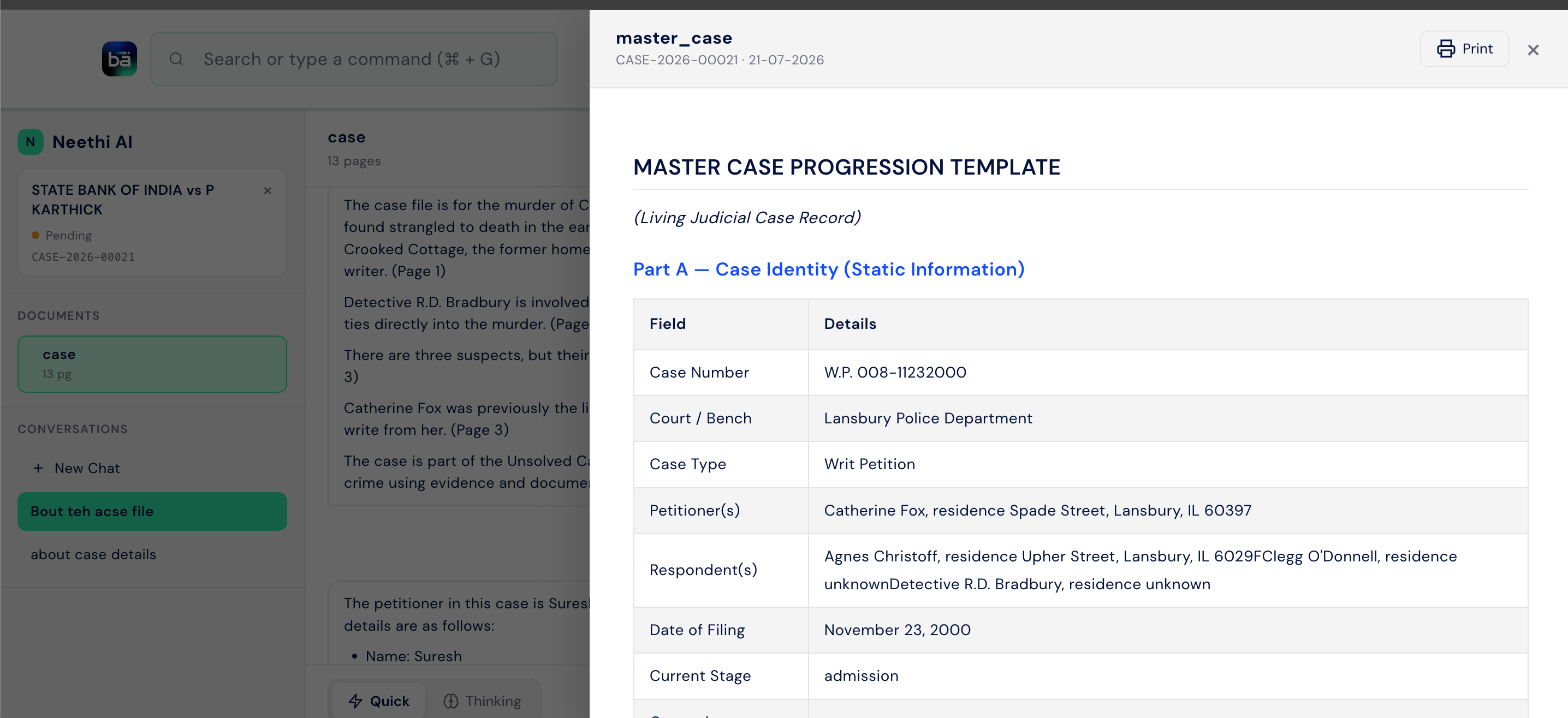
Generate structured reports - case summaries, key issue analysis - directly from your documents.
Case Sync
Case data is synchronised to the AI backend automatically so the assistant always has current context.
Enable the AI Assistant
Role: Administrator
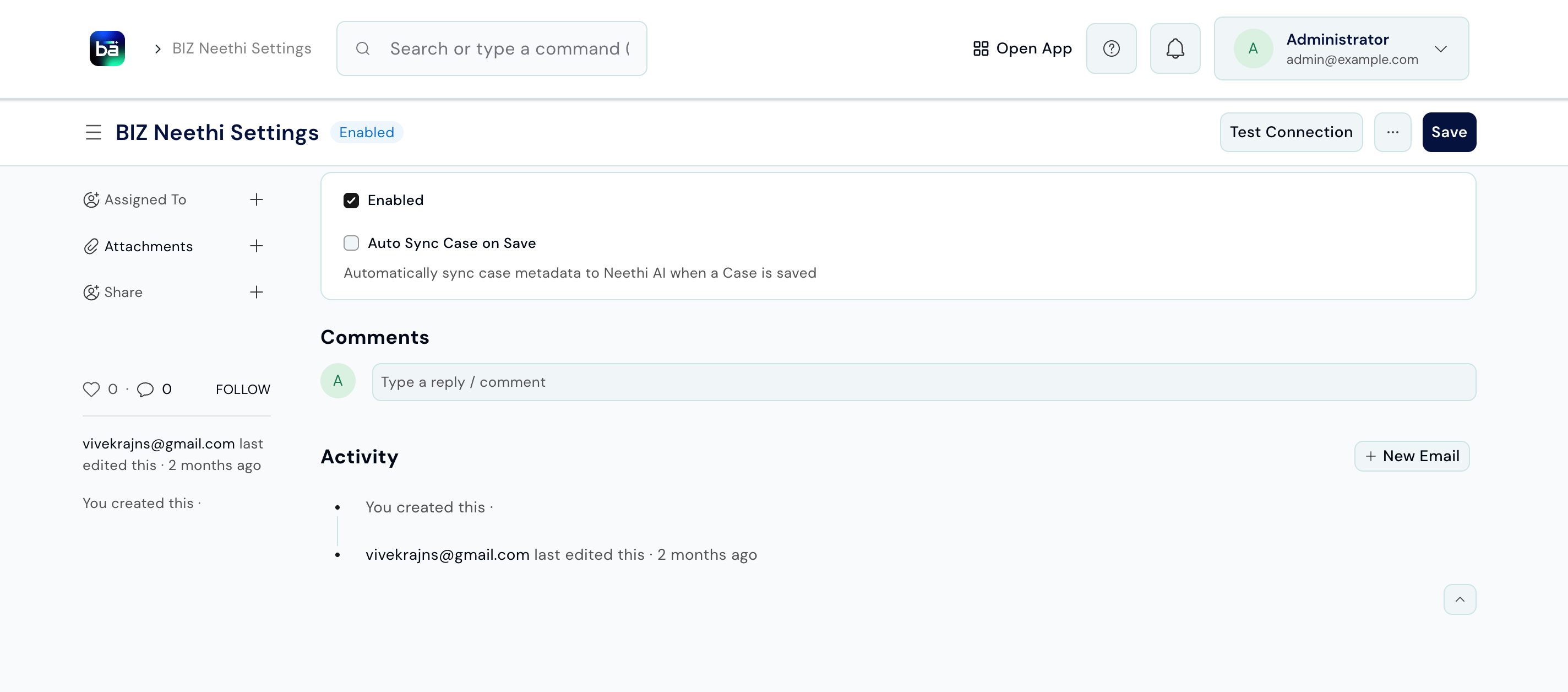
After saving, click Test Connection to verify the integration is reachable before relying on it.
Upload a Document
To analyse a document, upload it to the AI first. The AI processes it in the background - this can take a few minutes for large files. Path: Open the Case → AI Assistant menu (top right) → Upload Document Requires: The AI assistant must be enabled. The case must exist.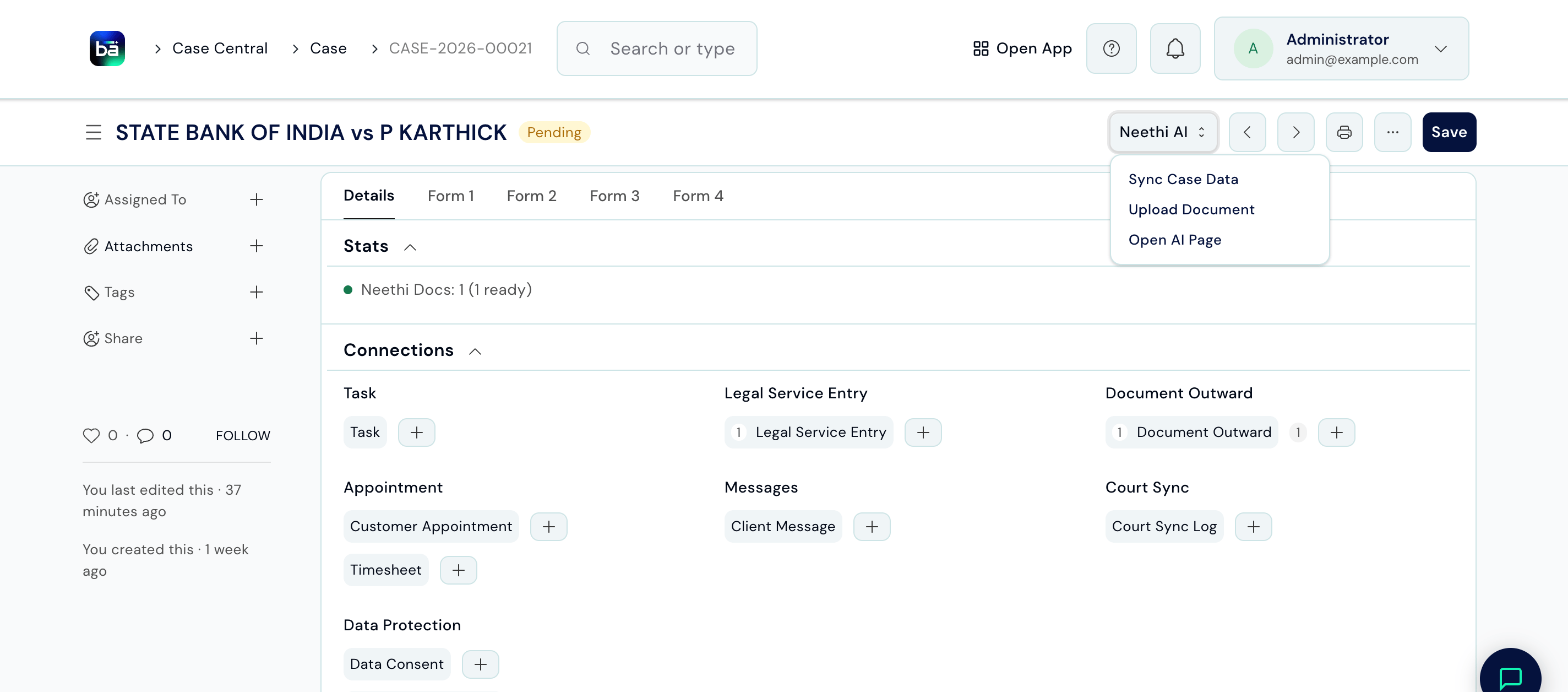
After saving, monitor the Ingestion Status field. Once processing completes, the document appears under Documents in the AI Assistant workspace, ready to reference in a conversation:
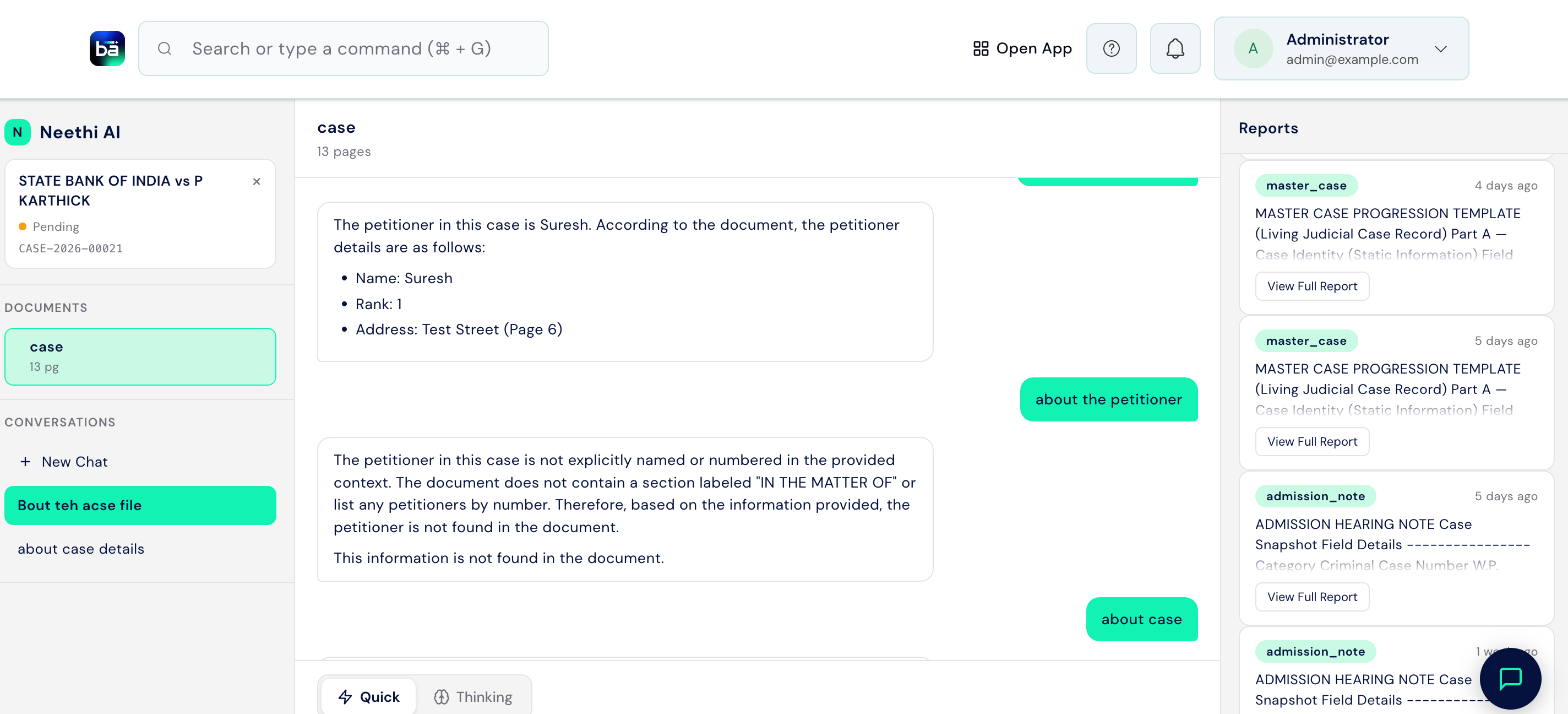
Ask the AI a Question
Once at least one document has been successfully ingested, start a conversation. Path: Open the Case → AI Assistant menu (top right) → Open AI Page → New Chat Requires: At least one document for this case must have Ingestion Status = Completed. Click New Chat, then choose a mode before typing your question: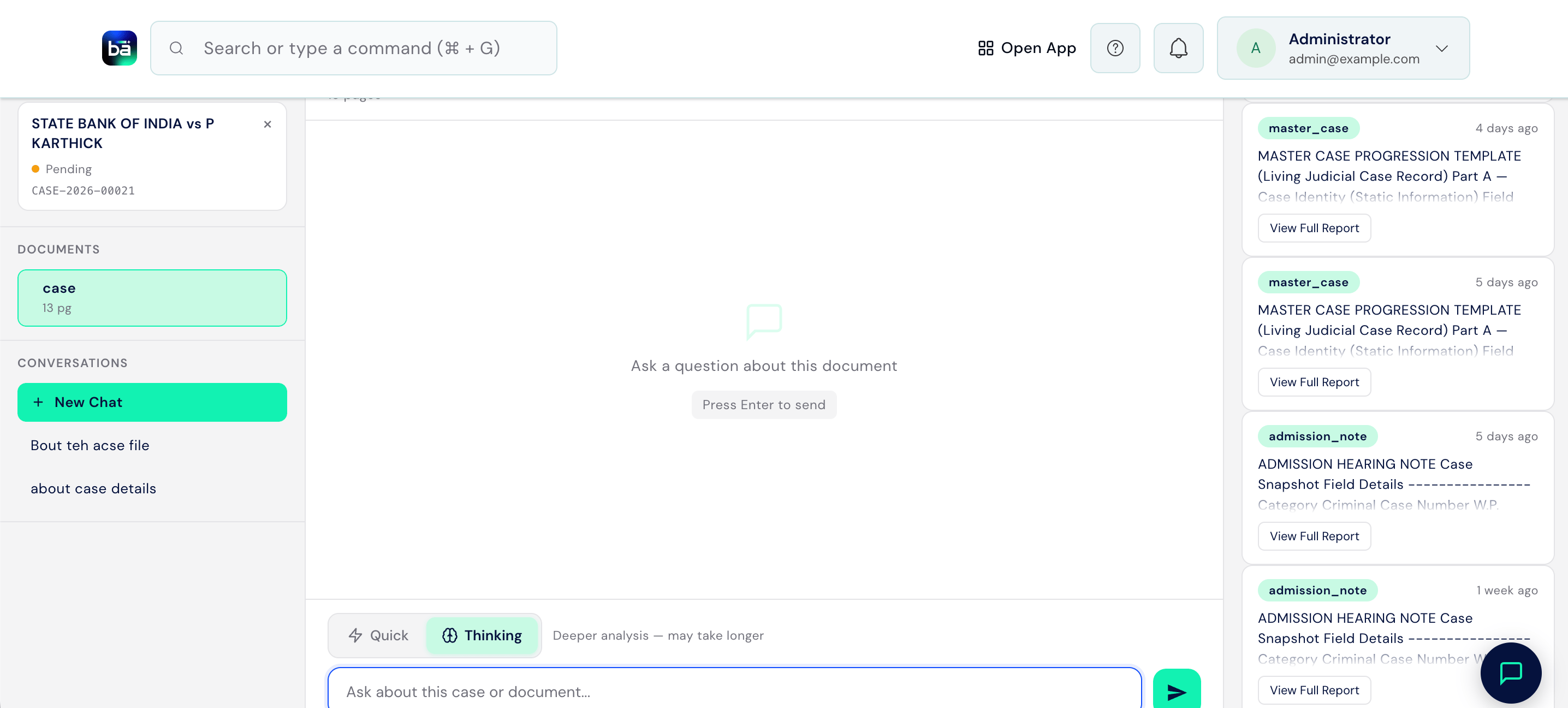
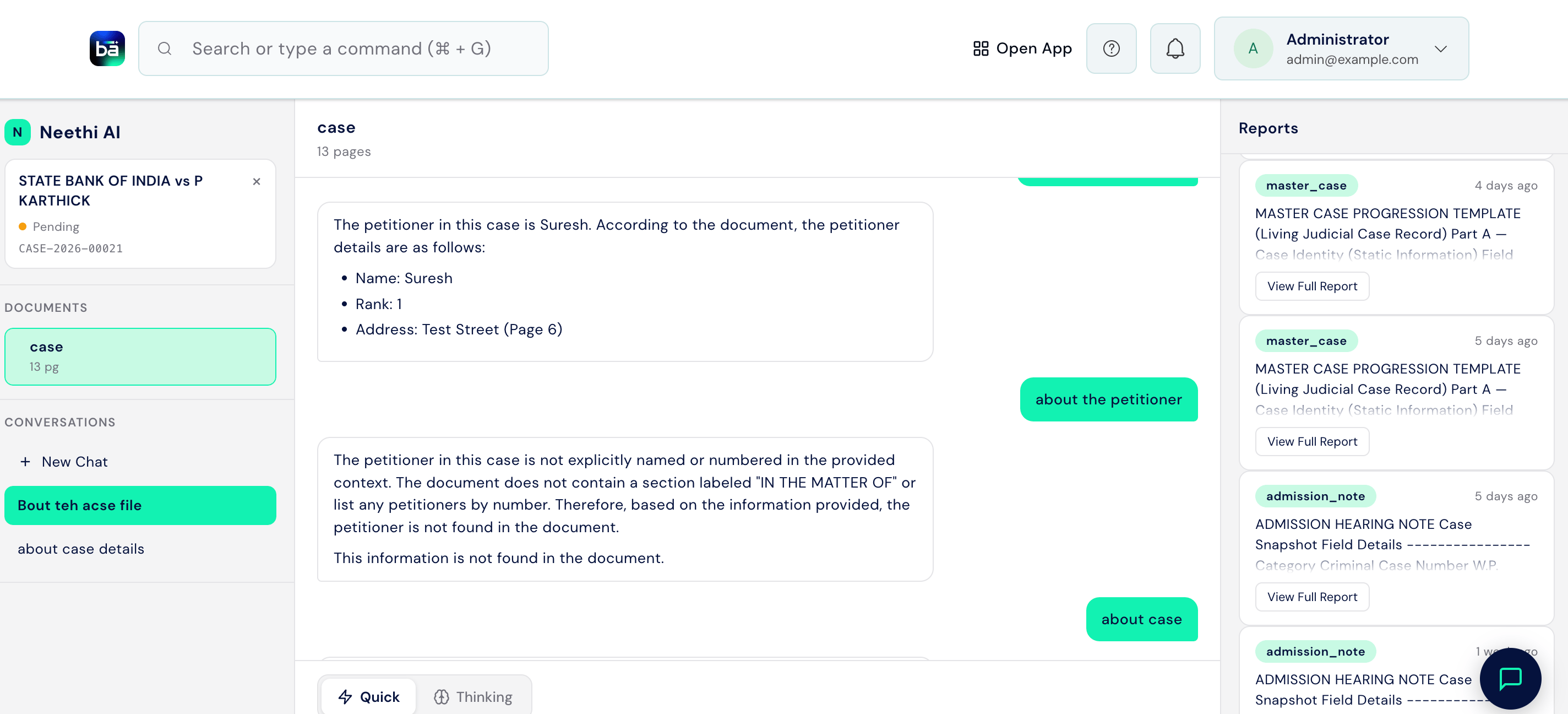
- “What are the key obligations of the defendant under this agreement?”
- “Summarise the relief claimed in the plaint.”
- “Are there any limitation period issues in this case?”
- “What conditions must be met before the lease can be terminated?”
Generate a Report
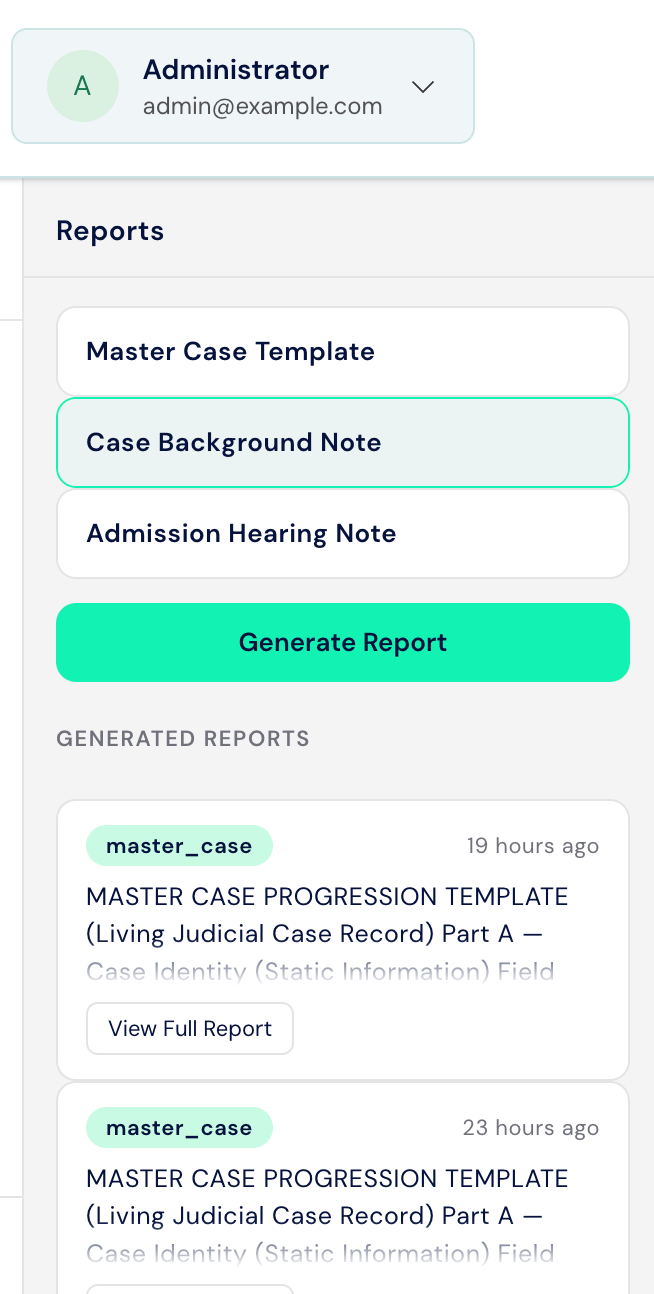
The AI can produce a structured written report from your case documents - for example, a case summary or an analysis of key legal issues. Path: Open the Case → AI Assistant menu (top right) → Open AI Page → Reports panel Select a report template card, then click Generate Report:- Master Case Template
- Case Background Note
- Admission Hearing Note
Tips
- PDF format gives the best results. Scanned images or image-only PDFs cannot be read by the AI - use text-based PDFs where possible. If you only have a scanned copy, run it through an OCR tool first.
- Name documents clearly. “Court Order dated 12-Jan-2025” is far more useful than “Document1.pdf” when choosing which document to query in a conversation.
- Keep conversations focused. A conversation linked to a specific document gives more precise answers than querying all documents at once for a complex case.
- AI reports are a starting point, not a final product. Always review generated summaries and analysis before using them in a filing or presenting them to a client.
- Enable Auto Sync Case on Save so the AI backend always reflects your latest case data. Without it, newly added case information won’t be available until a manual sync is triggered.